


According to UNESCO, over 240 million children worldwide live with disabilities, numerous of whom face barriers to quality education. That statistic alone tells us something influential: inclusion is not a function concern. It is central to the future of education.
Inclusive education is no longer a progressive ideal, it is a global expectation. Classrooms today are vibrant, diverse ecosystems where learners differ in ability, language, culture, cognition, and emotional growth.
But here’s the real question, how do schools move from intention to impact?
This is where applied educational psychology steps in.
Applied educational psychology bridges research and classroom practice. It does not sit quietly in theory. It actively informs teaching methods, behavioural interventions, assessment systems, and inclusive strategies that allow every learner to thrive.
Let’s explore how this field is reshaping inclusive and special education and why advanced qualifications such as an Applied Doctorate in Educational Psychology are becoming progressively relevant for today’s education professionals.
What Is Applied Educational Psychology?
Educational psychology studies how people learn - cognitively, socially, emotionally, and developmentally. Applied educational psychology takes that knowledge and implements it in real educational settings.
It asks practical questions such as:
- Why is a student struggling with reading despite adequate instruction?
- How can teachers better support learners with ADHD in mainstream classrooms?
- What strategies reduce anxiety in exam-driven environments?
- How do early interventions change long-term academic outcomes?
Rather than offering one-size-fits-all solutions, applied educational psychology recognises individual learning profiles and tailors strategies consequently.
The Change Toward Inclusive Education
Internationally, education systems are moving away from segregated models of special education. Instead of isolating students with learning differences, schools are integrating them into mainstream classrooms with appropriate support systems.
Research from the OECD shows that inclusive environments not only benefit students with special needs but also improve social-emotional development among all learners. Exposure to diversity fosters empathy, collaboration, and adaptability skills that are essential in today’s interconnected world.
However, inclusion without expertise can quickly become overwhelming.
Teachers often report feeling underprepared to manage:
- Behavioural complexities
- Neurodiverse learning needs
- Emotional regulation challenges
- Curriculum differentiation
This is exactly where applied educational psychology becomes transformative.
Essential Areas of Impact in Inclusive and Special Education
1. Early Identification and Intervention
One of the most powerful applications of educational psychology is early assessment. Identifying learning differences at an early stage significantly improves long-term outcomes.
For example, structured phonological interventions for dyslexia in early primary years can reduce long-term literacy gaps by up to 50%. Early psychological insight allows schools to move from reactive to proactive support.
2. Individualised Education Plans (IEPs)
Applied educational psychologists contribute to designing evidence-based Individualised Education Plans. These are not generic adjustments but data-informed frameworks aligned with measurable goals.
They incorporate:
- Cognitive assessments
- Behavioural analysis
- Learning style profiling
- Emotional development indicators
The result? Organized support that is measurable, adaptable, and effective.
3. Behavioural and Emotional Support Systems
In inclusive classrooms, behavioural challenges frequently reflect unmet cognitive or emotional needs. Applied educational psychology helps educators interpret behaviour not as defiance, but as communication.
Techniques such as Functional Behaviour Assessments (FBA), Positive Behaviour Support (PBS), and social-emotional learning frameworks help schools:
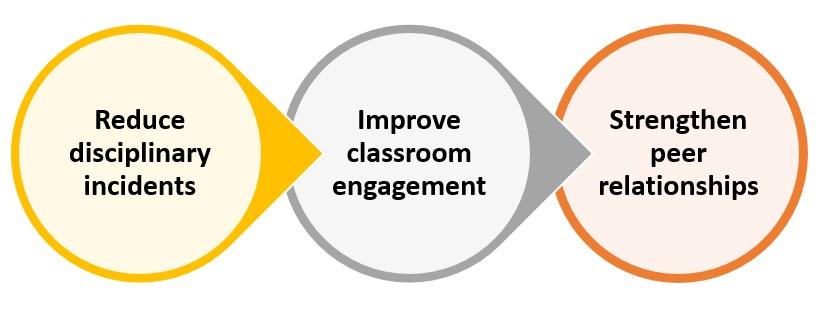
Data-driven behavioural strategies are replacing outdated punitive approaches and with measurable success.
4. Supporting Neurodiversity
Neurodiversity, including autism spectrum conditions, ADHD, dyslexia, and other cognitive variations is increasingly recognised as part of human diversity rather than deficit.
Applied educational psychology promotes strength-based models that focus on:
- Executive functioning strategies
- Sensory regulation techniques
- Structured classroom routines
- Visual learning supports
Rather than forcing conformity, inclusive approaches create flexible learning pathways.
5. Teacher Empowerment and Professional Development
An often-overlooked benefit of applied educational psychology is its role in teacher development.
Educators equipped with psychological insight demonstrate:
- Greater confidence in managing diverse classrooms
- Improved instructional adaptability
- Stronger communication with parents and support teams
This ripple effect strengthens the entire school ecosystem.
Professionals pursuing advanced qualifications, including an Applied Doctorate in Educational Psychology, often move into leadership roles where they shape inclusion policies, training frameworks, and intervention systems across institutions.
Why Advanced Study Matters in 2026 and Beyond?
Education is evolving fast. Digital tools, hybrid learning environments, and global classrooms introduce new complexities. At the same time, awareness of mental health and neurodiversity is increasing.
According to the World Health Organization, one in seven adolescents experiences a mental health condition globally. Schools are increasingly becoming the first line of support.
This growing responsibility requires professionals who can:
- Interpret psychological research
- Implement evidence-based interventions
- Evaluate programme effectiveness
- Influence policy decisions
Advanced doctoral-level study equips professionals not just to participate in inclusion but to lead it.
An Applied Doctorate in Educational Psychology is chiefly valuable because it combines academic rigour with real-world application. It prepares professionals to conduct research that directly impacts classroom practice, school leadership, and systemic reform.
Career Pathways in Applied Educational Psychology
For professionals considering further study, opportunities extend beyond traditional school roles.
Graduates often work as:
- Educational psychologists
- Inclusion coordinators
- Special education consultants
- Policy advisors
- Academic researchers
- School improvement strategists
With inclusion becoming a global mandate, demand for psychologically informed leadership continues to grow across international education systems.
The Future of Inclusive Education
Inclusive education is no longer about accommodation. It is about transformation.
Applied educational psychology challenges educators to rethink:
- Assessment models
- Curriculum flexibility
- Behavioural frameworks
- Leadership structures
It replaces assumptions with data.
It replaces uniformity with flexibility.
It replaces barriers with opportunity.
Most importantly, it centres the learner, every learner.
Final Thoughts
Inclusive education succeeds when empathy meets expertise. Applied educational psychology provides that expertise grounding compassionate teaching in evidence-based strategy.
For educators and professionals seeking to deepen their impact, advanced study options such as an Applied Doctorate in Educational Psychology offer a pathway to leadership, research-driven practice, and meaningful systemic change.
The future of education is inclusive.
The question is - are we prepared to lead it?
FAQs
-
Why is applied educational psychology important in special education?
Special education requires more than accommodation, it requires understanding how students learn differently. Applied educational psychology helps professionals design personalised interventions, improve engagement, and monitor academic and emotional progress effectively.
-
Who should consider pursuing an Applied Doctorate in Educational Psychology?
Experienced educators, inclusion coordinators, school leaders, counsellors, and professionals working in learning support roles may benefit from pursuing an Applied Doctorate in Educational Psychology. It prepares individuals for leadership, research, and policy-level impact in education systems.
-
What career opportunities are available in this field?
Graduates can work as educational psychologists, SEN specialists, inclusion leaders, policy advisors, academic researchers, or consultants. With inclusion becoming a global priority, demand for specialists in this field continues to grow.
-
Is applied educational psychology relevant outside school settings?
Yes. The principles extend to higher education, corporate training, educational consultancy, curriculum development, and educational policy design. The skills gained are adaptable across various learning environments.
Written By : Tammy C. Bow