


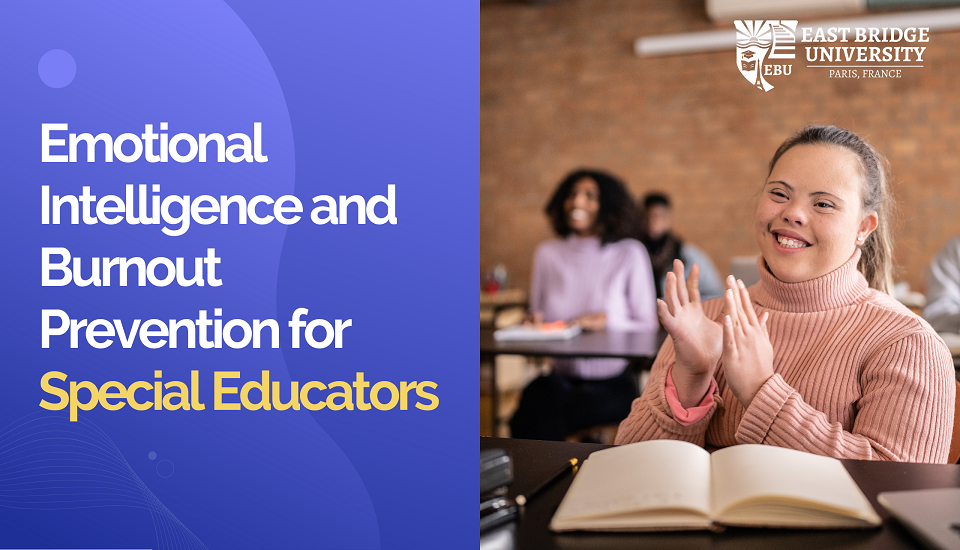
Why caring deeply shouldn’t come at the cost of your well-being?
Teaching is emotional work.
Teaching students with special needs is emotional work on another level.
You celebrate progress others might overlook.
You manage behaviors no one ready you for.
You advocate, adapt, reassure, document and then do it all again tomorrow.
And yet, many special educators quietly ask themselves:
“Why am I so exhausted when I love what I do?”
The answer frequently lies at the connection of emotional intelligence and burnout two topics that are finally getting the attention they deserve in education.
Burnout Among Special Educators: The Reality We Don’t Talk About Enough
Let’s start with the numbers because feelings are real, but data helps us listen better.
- According to global education studies, special educators experience burnout at rates 20-30% higher than general education teachers
- Nearly 1 in 2 special educators report emotional fatigue within their first five years
- The top contributors include emotional overkill, lack of institutional support, and endless role expansion
Burnout doesn’t show up sudden.
It builds gently through empathy exhaustion, decision overload, and the pressure to always be “emotionally available.”
And that’s where Emotional Intelligence (EI) becomes a defensive skill, not a soft concept.
What Emotional Intelligence Really Means in Special Education?
Emotional intelligence isn’t about being calm all the time or overpowering emotions. It’s about understanding, managing, and responding to emotions yours and others' deliberately.
For special educators, EI shows up in everyday moments:
- Recognising your own stress signs before they turn into burnout
- Responding to challenging behaviors without internalising them
- Setting emotional boundaries while staying sympathetic
- Communicating calmly with parents, therapists, and administrators even on hard days
In short, EI helps you care without burning out.
The EI–Burnout Connection: What Research Tells Us
Here's where it gets interesting. Multiple education and psychology studies have found that:
- Teachers with high emotional intelligence report lower burnout levels, even in high-stress classrooms
- EI skills are strappingly connected to resilience, job satisfaction, and long-term retention
- Emotional self-regulation decreases emotional exhaustion more effectively than workload reduction alone
Translation?
You may not be able to control class size, paperwork, or systemic gaps but you can reinforce how you emotionally process them.
Emotional Intelligence Skills That Act as Burnout Shields
1. Emotional Self-Awareness: Catching Burnout Early
Burnout hardly starts as collapse, it starts as constant irritation, numbness, or over-functioning. Emotionally intelligent educators regularly ask:
- What am I feeling right now?
- Why is this situation triggering me?
- What do I need before I continue?
Awareness creates choice and choice prevents emotional overwork.
2. Self-Regulation: Responding, Not Absorbing
Special educators frequently absorb emotions from students, families, even colleagues. EI teaches you to:
- Pause before reacting
- Separate student behavior from personal identity
- Reset emotionally between sessions or classes
This doesn’t make you less empathetic. It makes your empathy sustainable.
3. Empathy With Boundaries (Yes, Both Matter)
Empathy without boundaries leads to compassion fatigue. High-EI educators understand:
- You can care deeply without carrying everything home
- Supporting students doesn’t require emotional self-sacrifice
- Boundaries are not selfish, they’re professional survival tools
Burnout reduces when empathy is paired with self-protection.
4. Emotional Communication: Reducing Invisible Stress
Silent frustration is one of the major burnout accelerators. Emotionally intelligent educators communicate:
- Needs clearly to leadership
- Concerns professionally to parents
- Limits respectfully to colleagues
Clear emotional communication stops resentment from silently building.
5. Meaning-Making: Reconnecting With Purpose
Burnout flourishes when effort feels invisible. EI helps educators reconnect with:
- Small wins
- Long-term impact
- Purpose beyond daily exhaustion
This reframing doesn't ignore challenges, it anchors you through them.
Why EI Training Should Start During Teacher Preparation?
Here's the uncomfortable truth:
Numerous teachers are trained widely in curriculum but slightly in emotional resilience. That's why modern teacher preparation programs, including a B.Ed. in Special Education, are progressively recognising emotional intelligence as a core professional capability, not an optional skill.
Programs that assimilate EI training help future educators:
- Enter classrooms emotionally prepared not just academically qualified
- Develop coping strategies before stress becomes chronic
- Build long-term career sustainability, not short-term survival
Because knowledge alone doesn’t protect teachers, emotional skills do.
Simple, Practical EI Habits Special Educators Can Start Today
You don't need a whole life overhaul to reduce burnout. Start small.
- Two-minute emotional check-ins between classes
- End-of-day emotional offloading (write, walk, breathe, no planning allowed)
- Language shifts: from “I failed today” to “Today was hard”
- Scheduled recovery time, not leftover time
Consistency matters more than concentration.
Burnout Prevention Is Not a Personal Failure, It's a Professional Importance
Let's be clear:
Burnout doesn't mean you're weak.
It means you’ve been emotionally strong for too long without adequate support.
Emotionally intelligent educators don’t push through burnout, they recognise it, respond to it, and recover from it.
And when institutions value EI, everyone benefits:
- Teachers stay longer
- Students receive consistent support
- Learning environments become healthier and more humane
Final Thoughts: Teaching With Heart Shouldn’t Cost Your Health
Special educators change lives not in loud, visible ways, but in deeply human ones. Emotional intelligence ensures that while you support others, you don’t disappear in the process. Whether you’re entering the field through a B.Ed. in Special Education or already navigating the realities of inclusive classrooms, remember this:
Your emotional well-being is not separate from your effectiveness, it is essential to it.
Teaching with heart is powerful. Teaching with emotional intelligence makes it sustainable.
Written By : Christina B