



Pursuing a Doctor of Education is no small commitment, particularly when you’re balancing leadership roles, professional responsibilities, and research. For numerous candidates enrolled in an Ed.D. Degree online (Doctor of Education), the major question isn’t how to write a dissertation, but what to write it on.
In 2026, education is developing faster than ever. Digital alteration, equity-driven reforms, leadership responsibility, and AI-powered learning systems are reshaping how institutions operate. That makes this a perfect time to choose a dissertation topic that is not only academically sound, but also professionally related and future-ready.
This blog explores top dissertation ideas for online Ed.D. candidates in 2026, grounded in real-world practice, global trends, and applied research precisely the kind of work senior educators and leaders are expected to produce.
Why Dissertation Topic Choice Matters More Than Ever?
According to recent international Doctorate completion studies, nearly 40% of Ed.D. candidates delay graduation due to unclear or excessively broad research topics. The most successful candidates tend to choose topics that:
- Develop directly from professional practice
- Address a clearly distinct institutional or systemic problem
- Allow access to real data, stakeholders, or learning environments
For candidates studying through an Ed.D. Degree Online, this placement is even more critical. Your workplace isn’t a disruption, it’s your research laboratory.
Instructional Leadership in Hybrid and Online Learning Settings
Why it matters in 2026:
Over 65% of higher education institutions worldwide now operate in hybrid or fully online formats. Yet several leaders are still adapting legacy leadership models to digital learning contexts.
Possible research angles:
- How instructional leadership influences faculty engagement in online programmes
- Leadership approaches that improve teaching quality in hybrid schools
- Professional development models for online instructional leaders
This topic is perfect for academic leaders, principals, and programme heads navigating digital transformation.
1. Impartiality, Inclusion, and Access in Digital Education
Why it matters:
While online education has extended access, digital inequity remains a major barrier, especially in emerging economies and underserved communities.
Research focus areas:
- Impact of online education on marginalised learner groups
- Inclusive instructional design practices in virtual classrooms
- Institutional strategies for reducing digital learning gaps
This dissertation path aligns powerfully with global education goals and policy-focused leadership roles.
2. Teacher Professional Growth in the Age of AI
2026 reality check:
AI is no longer optional in education. UNESCO reports show that over 70% of educators feel underprepared to integrate AI morally and efficiently into teaching.
Potential dissertation directions:
- AI literacy frameworks for teacher training programmes
- Educator perceptions of AI-supported teaching tools
- Ethical leadership in AI-driven educational environments
This topic allows Ed.D. candidates to bridge leadership, ethics, and instructional innovation.
3. Student Engagement and Retention in Online Degree Programmes
Why institutions care:
Online programmes often struggle with persistence. Globally, online learner dropout rates are 10–20% higher than on-campus programmes.
Research questions could explore:
- Leadership strategies that improve online student retention
- Role of academic advising and mentoring in virtual programmes
- Institutional cultures that foster belonging in online education
This topic is particularly relevant for programme directors and education administrators.
4. Change Management in Educational Institutions
The leadership challenge:
Educational change creativities fail nearly 60% of the time, often due to leadership resistance or poor implementation strategies.
Dissertation possibilities:
- Leadership approaches to managing curriculum reform
- Change readiness among educators and institutions
- Organisational culture and resistance to innovation
This topic suits senior leaders responsible for reform, accreditation, or strategic transformation.
5. Assessment, Accountability, and Learning Consequences
Why it’s appropriate:
With increased scrutiny on learning outcomes, institutions are being asked to demonstrate measurable impact, not just programme completion.
Research directions:
- Effectiveness of alternative assessment models
- Leadership perspectives on outcomes-based education
- Assessment practices in online and competency-based programmes
This dissertation track is ideal for quality assurance professionals and academic administrators.
6. Well-being, Burnout, and Leadership Sustainability in Education
A growing concern:
Studies recommend that over 50% of education leaders report high levels of burnout post-2024, affecting decision-making and institutional stability.
Potential research angles:
- Leadership stress and its impact on school performance
- Organisational policies supporting educator well-being
- Sustainable leadership models in education
This topic resonates deeply with senior professionals seeking long-term leadership efficiency.
Choosing the Correct Topic: A Practical Framework
Before finalising your dissertation topic, ask yourself:
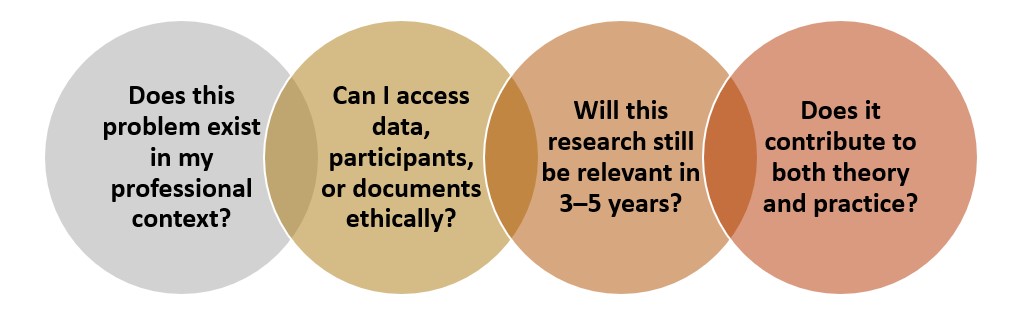
Strong Ed.D. dissertations don’t chase trends, they solve real problems with academic discipline.
The Applied Benefit of an Online Doctor of Education (Ed.D.)
One of the significant strengths of an Ed.D. Degree online is its applied nature. Unlike traditional academic Doctorates, the Ed.D. is planned to:
- Translate research into leadership practice
- Influence institutions, policy, and professional standards
- Recognise the candidate’s existing experience and authority
At East Bridge University, Doctorate research is planned to help candidates align dissertation work with their current leadership roles, ensuring relevance, feasibility, and long-term impact.
Final Thoughts
Your dissertation is more than a graduation obligation, it’s a statement of leadership. In 2026, the most impactful Doctor of Education dissertations will be those that syndicate rigorous research, ethical practice, and real-world significance. By choosing the right topic early, online Ed.D. candidates can reduce delays, strengthen research quality, and graduate with work that truly matters.
If you’re pursuing an Ed.D. degree online, now is the time to ask not just what can I study? — but what change do I want my research to lead?
FAQs
1. What are the best dissertation topics for an online Ed.D. in 2026?
Ans – The best topics address real-world education challenges such as instructional leadership, digital equity, AI in education, student engagement, change management, and educator well-being.
2. How do I choose a dissertation topic for a Doctor of Education programme?
Ans – Choose a topic rooted in your professional practice that is feasible, researchable, ethically accessible, and aligned with leadership and institutional impact.
3. Can my workplace be used as a research setting for an Ed.D. Degree Online?
Ans – Yes. Many online Ed.D. programmes encourage candidates to use their workplace as a research setting, provided ethical approval and access permissions are in place.
4. What makes a strong Ed.D. dissertation topic different from a PhD topic?
Ans – An Ed.D. topic focuses on applied problem-solving and leadership practice, while a PhD topic is typically more theory-driven and disciplinary in nature.
5. Are applied research topics acceptable for an online Doctor of Education?
Ans – Yes. Applied research is essential to the Doctor of Education, as it connects scholarly inquiry with real-world educational practice and improvement.
6. How important is leadership relevance when selecting an Ed.D. dissertation topic?
Ans – Leadership relevance is critical, as Ed.D. research is designed to influence decision-making, organisational improvement, and educational outcomes.
7. What are common mistakes Ed.D. candidates make when choosing dissertation topics?
Ans – Common mistakes include selecting topics that are too broad, lack data access, are disconnected from practice, or change direction mid-research.
8. Can Ed.D. dissertation topics focus on AI, digital learning, or online education?
Ans – Yes. Topics related to AI, digital learning, and online education are highly relevant and suitable when examined through leadership, ethics, and impact.
9. How early should I finalise my dissertation topic in an Ed.D. programme?
Ans – Most candidates should refine their topic during the proposal stage to avoid delays and ensure alignment throughout the research process.
10. Does an online Ed.D. dissertation need to be publishable?
Ans – While publication is not always mandatory, a strong Ed.D. dissertation should be methodologically sound and suitable for publication or professional dissemination.
Written By : Tammy C. Bow