


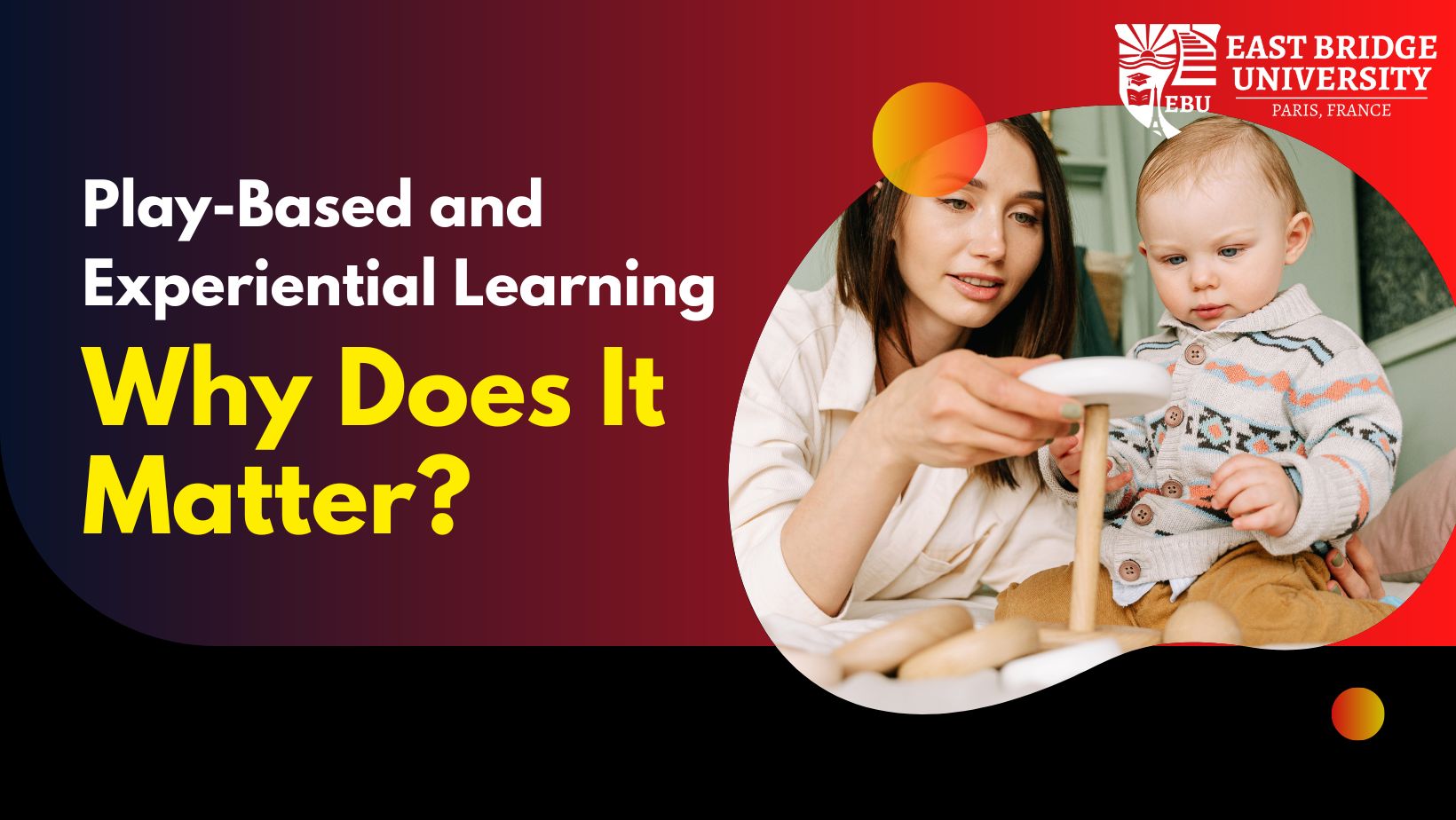
In the developing landscape of education, there’s a rising recognition that early learning should extend beyond textbooks and rote memorization. Play-based and experiential learning, rooted in exploration, curiosity, and sensory engagement, is revolutionizing how young children learn, grow, and prepare for future challenges. For students pursuing a B.Ed. in early childhood education, understanding these approaches is important not just in theory but in classroom practice.
What Is Play-Based and Experiential Learning?
Play-based learning refers to instructive experiences where play is the central vehicle for learning. It includes structured activities and free play where children engage with their environment, peers, and materials in meaningful ways. Experiential learning builds on this by adding intentional reflection and real-world exploration, connecting sensory experiences, outdoor activities, and hands-on tasks to cognitive and social development.
Far from being “just fun,” these approaches are research-backed and developmentally appropriate. They align with child development theories from Piaget and Vygotsky to modern educational frameworks that value child-directed learning and active engagement.
Why It Matters: Research and Evidence
A growing body of research shows that play-based learning delivers measurable benefits for early learners. A systematic review of studies highlights that play in early childhood leads to improved learning outcomes, pedagogical growth, and professional insights for educators, underpinning its educational importance in curricula design.
1. Cognitive and Academic Benefits
Play-based learning supports foundational cognitive skills like problem-solving, critical thinking, and language development. Studies have shown that when children engage with open-ended materials, such as blocks, nature objects, or sand and water, they naturally experiment, hypothesize, and reason; all vital precursors to literacy and numeracy success.
In one well-known longitudinal study (the Abecedarian Project), children exposed to enriched early learning environments showed significant advantages later in life: higher reading and math achievement, improved IQ scores, and greater likelihood of college enrollment, outcomes that highlight the long-term impact of quality early experiences.
2. Social-Emotional Development
Play does more than build cognitive muscles; it’s social glue. Through collaborative games, role-play, and sensory activities, children learn to share, negotiate, manage emotions, and build empathy, skills crucial to school readiness and life success. Researchers consistently note enhanced emotional regulation and relationship skills among children engaged in play-rich settings.
3. Physical and Sensory Growth
Outdoor and nature-based learning, key facets of experiential approaches, offer benefits that structured indoor environments cannot fully replicate. Studies indicate that children involved in regular outdoor play show improvements in gross motor skills, coordination, self-regulation, and even stress reduction compared to peers who lack such engagement.
One report found that outdoor play activities correlate with significantly lower anxiety and stress indicators in children, along with better mood and emotional balance.
Given modern concerns about reduced playtime and screen exposure, these findings underscore the urgent need to preserve outdoor and sensory-rich experiences in early years curricula.
Practical Strategies for Integration
For educators training through a B.Ed. in early childhood education, embedding play and experiential learning into the curriculum isn’t optional, its core. Here are evidence-based strategies to do it well:
1. Design Purposeful Play Centers
Classrooms can be structured with “learning zones”: literacy corners with storytelling materials, math and puzzle areas, creative art spaces, and sensory tables filled with sand, water, or natural materials. These areas invite children to make choices, explore concepts at their own pace, and build deep engagement through tactile exploration.
2. Integrate Outdoor Play into Daily Schedules
Outdoor environments offer unparalleled opportunities for exploration and experiential learning. Whether it’s nature walks, gardening, or unstructured free play, these activities help children test physical limits, interact with peers, and connect academic concepts (like counting, shapes, or weather observation) to real life.
Educators can start with short daily outdoor sessions, building up to longer exploratory periods. The goal is not just exercise but sensory engagement, hearing birds, feeling textures, observing shadows, and balancing on logs all contribute to holistic development.
3. Use Play as Assessment
Rather than relying exclusively on formal tests, educators can observe children during play, capturing evidence of problem-solving, language use, teamwork, and emotional responses. These authentic insights offer a richer picture of development than traditional worksheets.
4. Reflect and Document
Experiential learning becomes deeper when children reflect on their activities. Simple discussions like "What did you notice?" or "How did you solve that problem?" encourage metacognition and help children articulate their thinking.
To End With
Play-based and experiential learning are not movements, they are foundational pillars of quality early childhood education. By embracing these approaches, educators help young learners build cognitive skills, emotional intelligence, physical coordination, and a lifelong joy of learning. For students pursuing a B.Ed. in early childhood education, mastery of these plans is not only academically relevant but essential for fostering environments where children thrive.
At East Bridge University, we are committed to preparing future educators with the theoretical knowledge and practical tools to make play and experiential learning central to early years curricula, preparing them to nurture the innovators, thinkers, and leaders of tomorrow.
FAQs: Play-Based and Experiential Learning
1. What is play-based learning in early childhood education?
Play-based learning is an approach where children learn through structured and unstructured play activities. It encourages exploration, creativity, problem-solving, and social interaction while aligning learning outcomes with developmental milestones.
2. How is experiential learning different from traditional classroom learning?
Experiential learning focuses on learning by doing. Instead of passive instruction, children actively engage through hands-on tasks, outdoor exploration, sensory activities, and real-world experiences that deepen understanding and retention.
3. Is play-based learning supported by research?
Yes. Multiple studies show that play-based learning improves cognitive development, language skills, emotional regulation, and social competence. Research also indicates long-term academic and life outcomes for children exposed to enriched early learning environments.
4. What role do sensory experiences play in early years curricula?
Sensory experiences, such as touching textures, hearing sounds, and engaging with natural materials, stimulate brain development and support language, emotional, and cognitive growth. They are especially important for inclusive and holistic learning.
5. How are play-based methods integrated into a B.Ed. in early childhood education?
A B.Ed. in early childhood education trains future educators to design purposeful play environments, integrate experiential learning into lesson planning, observe learning through play, and assess child development using research-based frameworks.
6. Why is play-based learning important in today’s digital age?
With increasing screen exposure, play-based and experiential learning offer balance by promoting physical activity, social interaction, creativity, and emotional resilience, skills essential for healthy development in the modern world.
Written By : Christina B